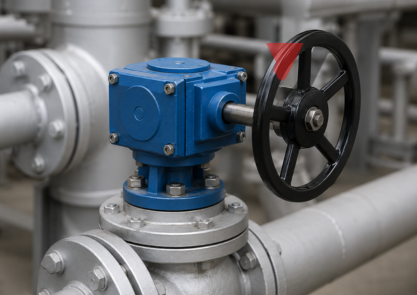
In large industrial plants, valves control the movement of liquids and gases every single day. Some valves are small and easy to turn. Others are massive, built to handle high pressure and heavy flow. Turning those large valves without support can feel extremely tight. That is where Industrial Valve Gearboxes make a real difference.
They are not complicated machines. Still, they play a very important role. By adjusting torque and motion, they help operators move heavy valves smoothly and safely. In high-pressure environments, that extra control matters a lot.
What Exactly Are Industrial Valve Gearboxes?
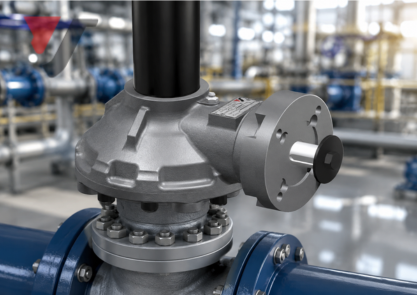
Industrial Valve Gearboxes are mechanical units mounted on industrial valves to reduce manual effort. Instead of applying full force directly to the valve stem, the gearbox increases torque through internal gears.
When someone rotates the handwheel, the gearbox multiplies the force and transfers it to the valve. Because of this mechanical advantage, even a large valve becomes manageable.
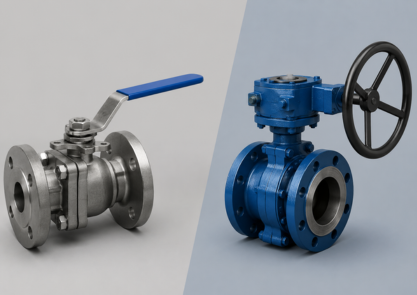
You will normally see Industrial Valve Gearboxes attached to:
- Gate valves
- Butterfly valves
- Ball valves
- Plug valves
These gearboxes are common in refineries, water treatment systems, power plants, and chemical processing units.
Why Heavy Valves Need Gear Support
Industrial valves often work under high pressure. If someone tries to operate them without assistance, the movement may feel uneven or too stiff. Over time, forcing a valve can also damage internal parts.
With Industrial Valve Gearboxes, the pressure does not directly affect the operator. The gear system handles most of the load. This creates smoother rotation and better control.
Because of that, industries benefit in several ways:
- Reduced physical effort
- Controlled valve movement
- Lower risk of sudden jerks
- Better sealing accuracy
- Longer valve life
That is why many facilities consider Valve Gearboxes essential for large-diameter valves.
How Industrial Valve Gearboxes Work
The working principle is based on gear reduction. The idea is simple but effective.
When the handwheel turns, it rotates the input shaft. Inside the gearbox housing, gears mesh together. These gears reduce speed while increasing torque. The output shaft then turns the valve stem with greater force.
The full process usually follows these steps:
- The operator turns the wheel.
- The input shaft rotates.
- Internal gears engage and multiply torque.
- Speed decreases but force increases.
- The valve stem moves steadily.
Because the movement is slower and stronger, the valve opens or closes without sudden shock.
Some modern Industrial Valve Gearboxes are also paired with electric actuators. In such cases, the system can operate automatically from a control panel.
Common Types of Industrial Valve Gearboxes
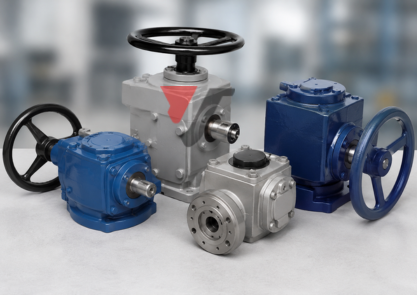
Different industrial setups require different gearbox designs. The main types include the following.
Worm Gear Type
Worm gear systems are widely used in Industrial Valve Gearboxes. They offer high torque output with a compact design.
They are recognized for:
- Smooth motion
- High torque multiplication
- Self-locking property
- Long-term reliability
These are commonly used with butterfly and ball valves.
Spur Gear Type
The spur gear gearboxes have a simple design. They are easy to maintain and are suitable for moderate torque applications.
Gate valves commonly use this type of gearbox because they require multi-turn operation.
Bevel Gear Type
Bevel gears are helpful when motion needs to change direction, usually at a right angle. In underground pipeline networks, this type of design facilitates easy access.
Most pipeline networks use Industrial Valve Gearboxes with bevel gears for ease of use.
Multi-Turn Gearboxes
Some valves need several rotations to fully open or close. Multi-turn Industrial Valve Gearboxes are built for such tasks.
They offer the following advantages:
- Valve positioning with gradual control
- Improved flow control
- Ability to handle high torque
These are mostly preferred in water supply and power production applications.
Where Industrial Valve Gearboxes Are Used
Industrial Valve Gearboxes are used in most industries that require flow control.
Oil and Gas Industry
In high-pressure pipelines, consistent control of the valves is necessary. Gearboxes ensure safe and controlled valve operation.
Water Treatment Plants
Water systems depend on accurate flow adjustment. Gear-assisted valves help maintain smooth performance.
Power Plants
Steam lines operate under extreme pressure. Industrial Valve Gearboxes enhance handling and dependability.
Chemical Plants
Control is critical in chemical processing. Gearboxes eliminate jerky motion and enhance safety.
Marine Use
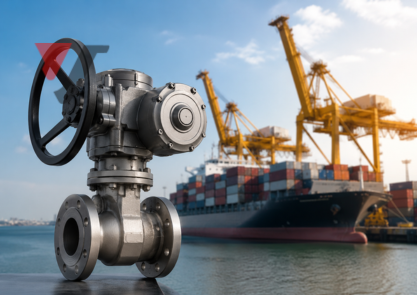
Ships and oil rigs use Industrial Valve Gearboxes to control fuel and seawater systems.
Key Advantages of Industrial Valve Gearboxes
Industrial Valve Gearboxes offer several advantages to the system when used in valve operations:
- Reduced effort on the part of the operator
- Enhanced control of the valve position
- Eliminated jerky motion
- Increased longevity
- Reduced maintenance
These advantages add up with time, making the cost of maintenance and repair lower.
Selecting the Right Industrial Valve Gearboxes
The selection of the right Industrial Valve Gearbox depends on practical considerations:
- Valve size
- Operating torque
- Working pressure
- Operating conditions
- Control system (manual or automatic)
Engineers calculate the torque requirement before selecting Industrial Valve Gearboxes. This prevents overloading the system.
Final Thoughts
Industrial Valve Gearboxes seem like simple mechanical systems. They are not that simple, though. They offer several advantages to the system. They greatly reduce the effort required to operate heavy valves. They also enhance safety and facilitate smooth flow control.
In high-pressure and high-volume applications, handling valves is not an option. It directly affects safety and efficiency. By using Industrial Valve Gearboxes, industries ensure that their systems operate efficiently every day.
FAQs
1. What do Industrial Valve Gearboxes do?
They increase torque and reduce effort needed to operate heavy valves.
2. Are Industrial Valve Gearboxes used in automation?
Yes, they can be coupled with electric actuators for use in automated systems.
3. Which type is most common?
Worm gear types are most popular because of their high torque rating.
4. Do they improve valve lifespan?
Yes, they decrease the mechanical load on the valve.
5. Where are Industrial Valve Gearboxes mainly installed?
They are installed in oil, gas, water, power, chemical, and marine industries.