Most maintenance teams walk past a valve gearbox every single day without giving it a second thought. It sits bolted to the valve, does its job without making any noise, and nobody pays attention to it. Until the day it does not work. Then suddenly everyone is standing around it trying to figure out what went wrong.
This valve gearbox maintenance guide covers what a maintenance engineer or plant operator actually needs to do to keep these units running without surprise failures.
Why Valve Gearbox Maintenance Gets Skipped
Valve gearboxes do not demand attention the way pumps or compressors do. A pump will vibrate, run hot, and make all kinds of noise when something is developing inside it. A valve gearbox just sits there looking completely fine right up until a gear tooth strips or the housing seizes solid.
That silence makes it very easy to skip during routine maintenance rounds. However, a failed valve gearbox on a critical isolation valve can mean an unplanned shutdown, a process safety event, or a valve that will not close during an emergency.
Routine valve gearbox maintenance costs almost nothing in time or materials. Dealing with a stuck valve mid-operation costs significantly more in every possible way.
Step One: Visual Inspection
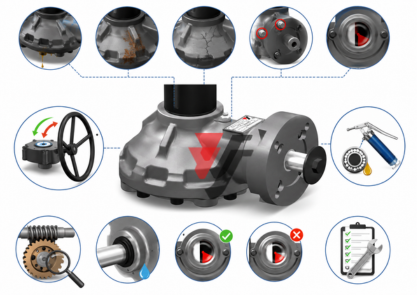
A solid valve gearbox maintenance routine always starts with a proper visual check before anything else gets touched. Walk around the unit and look for:
- Grease or oil seeping from housing seals or around the output shaft area
- Surface corrosion on the housing body, particularly around bolted joints and mounting faces
- Physical damage such as cracks, impact marks, or dents on the housing casting
- Loose or missing fasteners on the mounting flange and actuator pad
- Cracked or missing covers over the position indicator window
- Any indication of water entry around vent plugs or cable entries on motorized units
Early warning signs almost always show up during a visual check if the person doing the walkdown is actually paying attention. A large number of gearbox failures that get logged as sudden breakdowns were showing visible symptoms well before anything stopped working.
Step Two: Operational Check
After the visual check is done, operate the valve gearbox through its complete travel. Full closed to full open and back. While doing this, pay attention to:
- Any point in the travel where resistance feels higher than normal
- Grinding, clicking, or scraping sounds from inside the housing during movement
- Movement that feels jerky or uneven rather than smooth and continuous
- The handwheel needed noticeably more effort than it did during previous checks
- Mechanical stops engage harshly at the end of travel rather than smoothly
Any of these observations during the operational check means something has changed inside the unit. That warrants a closer look before the next scheduled valve gearbox maintenance window arrives.
Step Three: Lubrication
This section of the valve gearbox maintenance guide matters more than any other. Lubrication failure causes more valve gearbox problems than anything else on the list. Grease breaks down with age, picks up moisture contamination, or simply gets pushed away from the gear mesh area after years of operation.
For re-greaseable units, follow these points:
- Use only the grease grade specified by the gearbox manufacturer, typically a lithium complex or EP grease rated for the actual operating temperature
- Never mix two different grease types together, as this causes chemical incompatibility and loss of lubrication performance
- Apply new grease slowly through the grease nipple while cycling the gearbox through its travel, so fresh grease reaches the full contact area of the gear mesh
- Wipe away any grease that purges out from the relief points so it does not collect dirt and debris on the housing exterior
For sealed factory-filled units, scheduled regreasing does not apply in the same way. However, any unit that has been running for more than ten years or has seen heavy cycling duty is worth opening during a planned outage to check the condition of the internal grease is actually in.
Grease that looks dry, dark, or gritty when you open a valve gearbox means the unit needs a full internal clean and fresh grease charge before going back into service.
Step Four: Mechanical Stops and Travel Limit Check
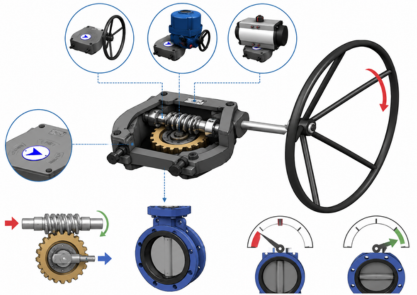
Mechanical stops set the hard endpoints for valve travel in both directions. These need periodic checking because:
- Stops can move out of position after an overtorque event or physical impact to the unit
- Wrong stop settings cause the valve element to either not seat properly in the closed position or get driven too hard against the seat face
- On motorized units, the limit switches tied to stop positions also need electrical verification during the same check
Confirm that the valve seats fully close and open completely without restriction. If there is a mismatch between where the valve sits and where the gearbox travel ends, adjust the mechanical stops following the manufacturer’s procedure for that specific unit.
Step Five: Seal and Housing Integrity
Water finding its way into a valve gearbox housing destroys lubrication quickly and starts internal corrosion that is hard to reverse. Outdoor units and anything in a submerged or wash-down environment are the most exposed to this.
During each valve gearbox maintenance visit, check:
- Condition of housing gaskets at inspection covers and end caps
- Output shaft seal condition where the shaft exits the housing body
- Vent plug or breather condition to confirm it has not blocked up
- Condition of paint or coating on outdoor units, where surface breakdown can accelerate corrosion underneath
Replacing a shaft seal during planned valve gearbox maintenance takes about twenty minutes. Replacing an entire gearbox because water has been sitting inside it for eighteen months takes considerably longer and costs a great deal more.
Repair or Replace -How to Make the Call
Not every problem with a valve gearbox needs a full unit replacement. Worn shaft seals, corroded fasteners, and degraded grease are all things that can be sorted out in the field with standard workshop spares.
Full replacement makes sense when:
- Internal gear teeth show visible pitting, wear grooves, or missing sections
- The output shaft has measurable play or wobble when checked by hand
- Cracks are visible in the housing near structural sections
- The unit has passed its design service life, and critical replacement parts are no longer available from the manufacturer
Keeping one spare valve gearbox of each critical size somewhere on site is a sensible practice for any plant where valve availability has a direct effect on production.
How Often Should Valve Gearbox Maintenance Happen
A practical industrial valve gearbox maintenance schedule works out like this:
- Visual inspection -every three months or during regular plant walkdowns
- Operational check -every six months
- Lubrication check and regreasing -every twelve months for standard duty, every six months for outdoor or high cycle service
- Full strip inspection -every five years or after any confirmed overtorque or impact event
Valves on emergency shutdown systems or fire protection headers deserve more attention than this baseline schedule, not less.
Explore our premium valve gearbox solutions designed for smooth and reliable industrial performance.
FAQs
Q1. How often should a valve gearbox be lubricated?
Every twelve months for standard indoor service. Every six months, if the unit is outdoors, in a corrosive environment, or cycling frequently.
Q2. What grease type works best for valve gearboxes?
Lithium complex or EP grease matched to the operating temperature. Always use what the manufacturer specifies and never mix two different grades together.
Q3. Can a seized valve gearbox be fixed in the field?
Sometimes, if the seizure is from grease starvation and caught before gear damage occurs. If teeth are already damaged, replacing the unit is the safer and faster option.
Q4. How do I know if mechanical stops need resetting?
If the valve does not reach full open or full closed even though the gearbox completes its travel, the stops need checking and likely adjusting.
Q5. Do sealed valve gearboxes ever need to be opened?
After ten or more years in service, or following a known overtorque event, opening the unit to inspect internal grease condition during a planned shutdown is worth the effort.