Butterfly Valve Gearboxes in Industrial Applications turn hand or motor input into steady rotational force, so a large valve opens and closes without punishing the pipeline or the operator. Plants running high-pressure lines lean on this hardware every shift.
Water treatment plants, chemical units, and power stations across India run on this gear mechanism daily. Here’s why it matters, how it actually works, and where it earns its keep on the floor.
What Are Butterfly Valve Gearboxes In Industrial Applications?
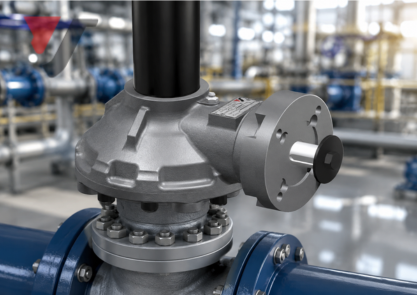
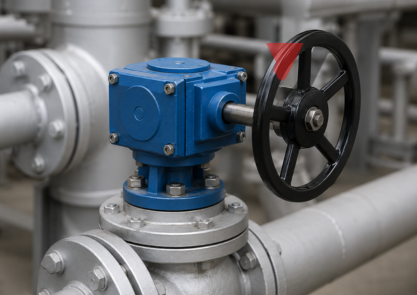
At the core, it’s a mechanical box bolted onto a valve that turns hand or motor input into steady rotational force at the disc.
Turn a handwheel, or wire up an actuator, and internal gears cut the effort needed to swing the disc through its ninety-degree arc. One person handles a valve that would otherwise fight back.
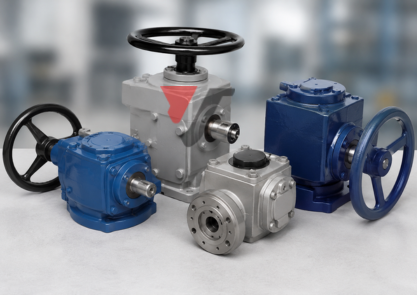
Most Butterfly Valve Gearboxes in Industrial Applications pack a worm gear set into a sealed housing, alongside a position indicator and limit stops.
Core parts of the assembly:
- Worm gear and worm wheel
- Input shaft for handwheel or actuator
- Limit stops for open and close positions
Why Do Plants Need Butterfly Valve Gearboxes In Industrial Applications?
Plants need them because cranking a large valve by hand gets unsafe fast once pipe diameter and pressure climb.
A valve past six inches builds real resistance from the fluid pushing against it. Skip the gearbox, and someone has to muscle the disc open, which is how a stem bends or a wrist gets hurt.
A gear ratio inside these Butterfly Valve Gearboxes in Industrial Applications eats up that resistance, so even a large valve turns with light, steady effort.
What Are The Main Benefits Of Butterfly Valve Gearboxes In Industrial Applications?
Smoother, safer control – that’s the headline benefit, protecting the valve as much as the operator.
Plant engineers like this setup because it eases wear on the seat and stem while handing over finer control of flow rate.
A few benefits worth noting:
- Less muscle needed during operation
- Gradual disc movement that keeps water hammer away
- Works fine with handwheels, chain wheels, or actuators
Put those together, and this gearbox becomes a natural fit anywhere large valves see constant flow swings.
How Do Butterfly Valve Gearboxes In Industrial Applications Work?
Inside Butterfly Valve Gearboxes in Industrial Applications, a worm and worm wheel pair does the heavy lifting, multiplying torque while slowing the speed that actually reaches the disc.
Turn the handwheel, and the worm gear bites into the worm wheel; that motion carries to the output shaft tied to the valve stem. Whatever gear ratio the unit carries decides how much easier the job feels.
Most units also carry a self-locking feature, so the valve stays put once set, even under vibration or a pressure surge.
The sequence inside these Butterfly Valve Gearboxes in Industrial Applications runs roughly like this:
- Torque goes in through handwheel or actuator
- Worm gear slows speed and builds torque
Where Are Butterfly Valve Gearboxes In Industrial Applications Used?
Butterfly Valve Gearboxes in Industrial Applications turn up across water treatment, chemical processing, power generation, and oil and gas work, basically anywhere a large butterfly valve controls flow.
Water treatment plants run this gear system on intake and discharge lines, where valves often top ten inches. Chemical units count on it for corrosive lines needing slow, deliberate movement to keep pressure spikes away.
Where it shows up most:
- Water and wastewater treatment plants
- Power plant cooling water systems
- Chemical and petrochemical processing units
Industrial units in Jaipur, Ahmedabad, and Pune keep bringing in this gear system for new builds and retrofit jobs alike.
Which Factors Should You Check Before Buying Butterfly Valve Gearboxes In Industrial Applications?
Gear ratio, housing material, mounting standard, and torque rating – check all four before you commit.
No two plants run under identical conditions, so the right pick depends on valve diameter and whatever fluid is moving through the line.
Worth reviewing before you buy:
- Gear ratio matched to valve size and torque needs
- Housing material suited to your plant environment
- ISO or DIN mounting flange compatibility
Get this wrong, and you’re stuck with mismatched hardware. Get it right, and performance stays reliable for years.
What Is The Future Of Butterfly Valve Gearboxes In Industrial Applications?
Smarter, sensor-fitted Butterfly Valve Gearboxes in Industrial Applications that support remote monitoring and automated control – that’s where this hardware is headed.
As plants push toward automation, more facilities pair this gear mechanism with electric actuators and position sensors for centralized control, trimming manual checks and feeding predictive maintenance programs.
For detailed specifications and product options, this resource is worth a look: Butterfly Valve Gearbox Guide.
Frequently Asked Questions
Are butterfly valve gearboxes suitable for large diameter valves?
Yes – built specifically for the higher torque large valves demand.
How long does a butterfly valve gearbox typically last?
Run regular maintenance, and it stays reliable for many years.
Does operating a geared butterfly valve need special training?
Not really. Handwheel operation stays simple enough for basic training.
Can these gearboxes work with both manual and motorized actuators?
Yes, most units handle handwheel operation plus electric or pneumatic actuators.
Is a butterfly valve gearbox necessary for small valves?
Small valves under six inches often work fine without one, though it still helps.