If you’ve ever tried cranking a large gate valve by hand with no gearing behind it, you already know why plants don’t leave this to chance. Industrial valve gearbox operators sit between the handwheel (or motor) and the valve stem, and they’re the reason a technician can close a 24-inch pipeline valve without throwing their back out.
This guide walks through what these units actually do, the different types you’ll come across on a shop floor, and how to size one so it doesn’t fail on you six months in.
What Exactly Are Industrial Valve Gearbox Operators?
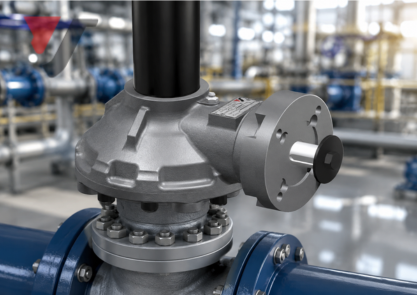
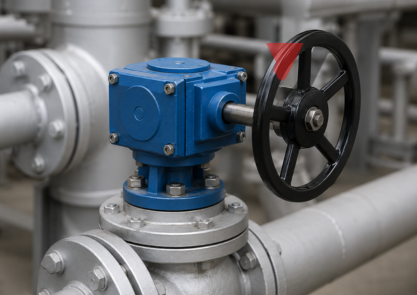
At their core, industrial valve gearbox operators are mechanical torque multipliers. You bolt one onto the valve stem or bonnet, and it takes whatever input you give it – a hand crank, an electric motor, a pneumatic actuator – and turns that into far more turning force than the input alone could produce.
A few things worth knowing upfront:
- They mount directly onto the valve stem or bonnet
- They come in manual, electric, and pneumatic versions
- They’re rated by output torque, not by how much effort goes in
- They’re built to survive years of repeated opening and closing
Without them, someone operating a large gate or globe valve manually would be fighting seat pressure and friction with nothing but arm strength – not exactly sustainable on a busy plant floor.
How Do They Actually Work?
The mechanics aren’t complicated once you break them down. Input motion – from a handwheel, a motor, or an actuator – enters the gearbox and passes through a gear train. That train slows the speed down while ramping the torque up.
From there, the output shaft connects straight to the valve stem, delivering enough force to overcome friction and seat pressure. Bevel gears usually handle any change in direction, while worm gears do most of the heavy lifting when it comes to multiplying torque.
One detail that’s easy to overlook: most industrial valve gearbox operators include a self-locking mechanism. That’s what keeps a valve exactly where you left it, even with vibration or pressure swings working against it.
The Main Types You’ll Run Into
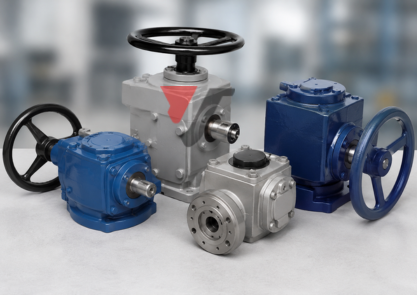
There are really three categories worth knowing, and each one fits a different job:
- Bevel gearboxes redirect motion at a 90-degree angle – handy when the mounting space forces an awkward orientation
- Worm gearboxes deliver serious torque and hold position well, which is why they show up so often on high-pressure lines
- Spur gearboxes are the lighter option, better suited to quarter-turn valves that don’t need much multiplication
- Multi-turn versions are what you’ll want for gate and globe valves specifically
Picking between them really comes down to three things: what kind of valve you’re dealing with, how much room you have to mount it, and how much torque the job genuinely calls for.
Getting the Sizing Right
This is where a lot of people trip up. Sizing starts with the valve’s maximum required torque – get that wrong, and you’ll either end up with a gearbox that stalls under load, or one that’s oversized, overpriced, and taking up more room than it needs to.
Engineers typically work out torque based on valve size, pressure rating, and seat friction, then build in a safety margin before landing on a gearbox rated comfortably above that number.
A few factors that matter most:
- Breakaway torque – the force needed just to get the valve moving
- Running torque once it’s already in motion
- How many turns does it take to complete a full travel
- Mounting orientation and how much installation space you’ve actually got
Honestly, most premature gearbox failures trace back to a sizing mistake somewhere in this process. It’s worth the extra few minutes to check your numbers against the manufacturer’s torque charts before you commit.
Where These Get Used Most
Oil and gas, water treatment, power generation, and chemical processing plants are the industries leaning on industrial valve gearbox operators the hardest – and it’s not hard to see why. These are places with large valves under real pressure, where manual operation without gearing simply isn’t practical.
Some common places you’ll find them:
- Pipeline isolation valves that need remote operation
- Water treatment gate valves cycle frequently throughout the day
- Steam line valves working under high temperature
- Chemical plant valves handling corrosive media
Across manufacturing hubs in India, plenty of local units depend on this equipment for valve automation – especially where valves sit somewhere remote or elevated enough that manual operation just isn’t realistic.
What to Weigh Before You Buy
Valve type, torque requirement, mounting orientation, and the environment the gearbox will actually live in – all of these factors go into which unit makes sense for your setup.
It’s also worth thinking through ambient temperature, exposure to moisture or chemicals, and whether you’ll need a manual backup option in case of a power failure.
Before you sign off on a purchase, it’s worth double-checking:
- The torque rating against what your application actually needs
- The material grade against the environment in which it will sit
- Compatibility with any actuators or handwheels already in place
- Whether spare parts and local support are easy to get
Sourcing a Reliable Unit
The manufacturers worth buying from are the ones who test their gearboxes under real load conditions and back them up with proper documentation and support – not just a spec sheet.
You can review available models and specifications at jayveerindia.in before making a final call. Taking the time to check torque ratings, material certifications, and warranty terms upfront tends to save a lot of headaches once the unit is installed and running.
Frequently Asked Questions
1. What is the main purpose of an industrial valve gearbox operator?
It multiplies input torque so a handwheel, motor, or actuator can generate enough force to open or close large valves without excessive manual effort.
2. How do I know which gearbox size I need for my valve?
Start with the valve’s maximum required torque (breakaway and running torque), add a safety margin, and match it against the manufacturer’s rated torque charts. Undersizing leads to stalling; oversizing wastes cost and space.
3. What’s the difference between a worm gearbox and a bevel gearbox?
Worm gearboxes deliver higher torque with strong self-locking, making them ideal for high-pressure valves. Bevel gearboxes are better suited to remote or angled mounting where the input needs to be redirected at 90 degrees.
4. Do industrial valve gearbox operators need regular maintenance?
Yes. Even though they’re built for repeated cycling over years, periodic lubrication, torque checks, and inspection for wear on the gear train help prevent premature failure.
5. Can a manual gearbox operator be upgraded to electric or pneumatic later?
In many cases, yes – provided the gearbox is compatible with the actuator you plan to add. It’s worth checking mounting flange standards and torque compatibility with the manufacturer before assuming an upgrade will fit.